by melinda
Share
Buyers across Southeast Asia, the Middle East, and Africa search for reliable trailer side cover roll forming machines every day. They share three real concerns: the machine arrives but no one knows how to set it up, the finished profiles come out twisted and out of shape, and after two or three years the equipment loses all precision and becomes scrap metal.
What we offer is not just a piece of steel. It is a tool that turns st37 black steel coils into high precision finished profiles, steadily and predictably. This trailer side cover roll forming machine's mechanical structure, control logic, and hydraulic system all stand up to close inspection. We have designed around every likely trouble spot before it can become a problem.
This article skips the marketing fluff. It walks you through the entire process from raw material input to finished output, explains the logic behind key hardware choices, and gives you the real details on overseas installation. Consider it a solid, no nonsense reference for your purchasing decision.
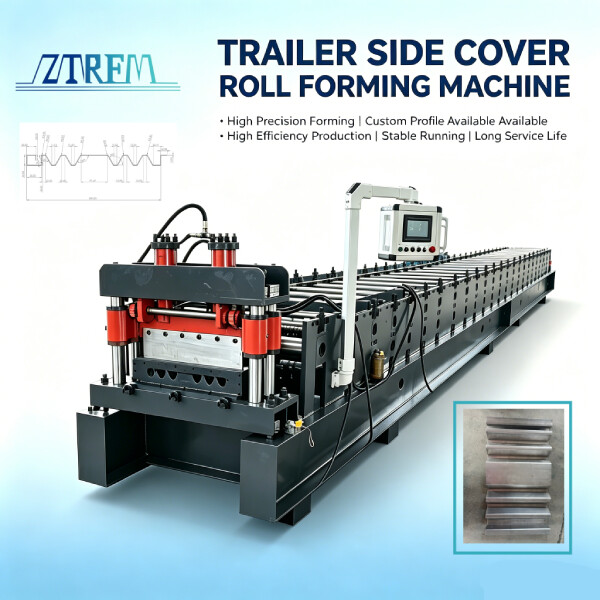
trailer side cover roll forming machine
The Full Production Workflow
The roll forming line runs as a continuous automated process. The material flows through five core stages:
Decoiler----Feedingdevice------Straightener----RollForming---Shearingsystem---Runout table

The Full Production Workflow
Decoiling. The hydraulic decoiler holds the heavy steel coil and feeds it out smoothly and steadily.
Straightening. The offset straightening rollers remove residual stress from the coil, so the strip returns to a flat, even state.
Roll Forming. The strip passes through consecutive roller stations, with each station bending the material gradually until the final profile shape is achieved.
Shearing. Once the strip reaches the preset length, the hydraulic system drives the Cr12MoV quenched blade to cut it cleanly in one quick motion.
Runout. The finished profiles slide onto the runout table where the operator collects and stacks them safely.
The entire sequence runs under PLC control. The operator simply sets the length and batch quantity on the touchscreen, and the trailer side cover roll forming machine takes care of the rest.

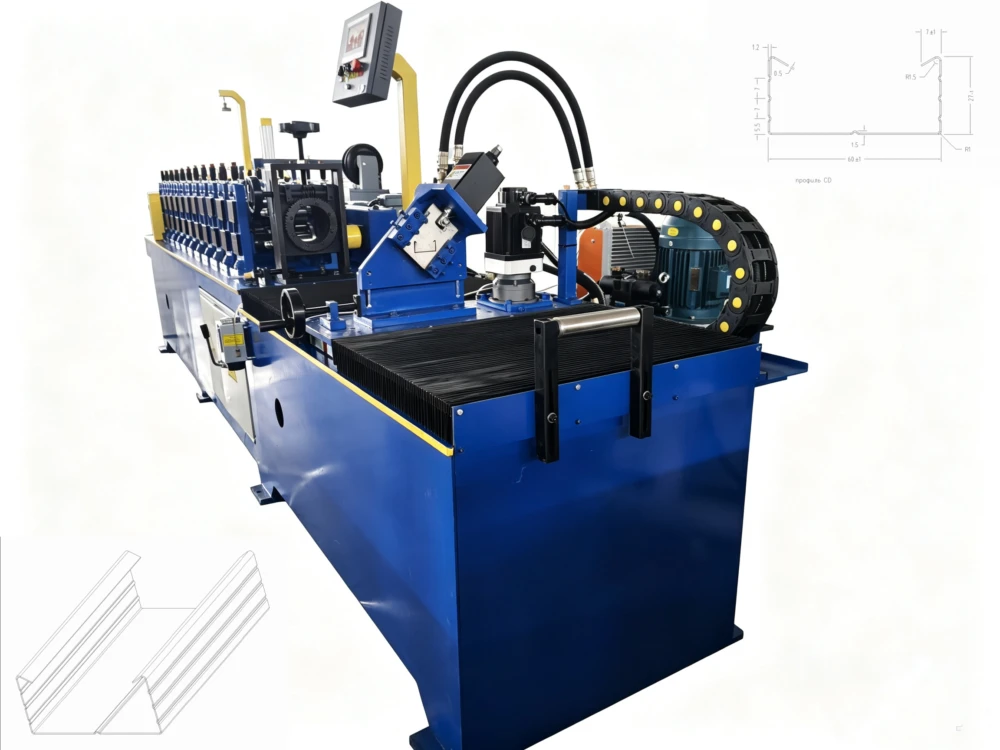
Overall display of the Trailer Side Cover Roll Forming Machine
Applications
-
Trailer and truck manufacturing
-
Transportation and logistics
-
Agricultural and industrial transport
-
Automotive body parts for commercial vehicles

Finished product pattern drawing of Trailer Side Cover Roll Forming Machine

Finished product picture of Trailer Side Cover Roll Forming Machine
Six Real Pain Points and How We Address Them
Pain point one: rough, burred shearing edges.
Our solution uses hydraulic drive with a Tri-blade cutting action. The blade closes smoothly and firmly, holding length tolerance within ±1mm. The cut edge is clean enough for direct installation without secondary finishing.
Pain point two: long profiles come out bent or twisted.
Our solution pairs a 25mm steel plate welded frame with a 400t load rated structure and a 115mm main shaft. The whole machine gains the torsional rigidity needed to keep long profiles straight from end to end.
Pain point three: installation and commissioning are hard for overseas buyers.
Our solution marks every hydraulic line and electrical wire with clear numbers and letters. Local electricians can handle the entire hook up by following the labels. We also supply detailed manuals and remote video support.
Pain point four: counting errors during batch production.
Our solution programs a batch quantity preset into the PLC. The machine stops automatically and signals when the target number is reached. This gives you accurate control over yield per coil and eliminates wasteful overproduction.
Pain point five: the hydraulic system overheats and leaks.
Our solution adds a cooling fan to keep oil temperature in the safe zone during long runs. High quality ferrule type fittings are pressure tested before shipment, so both temperature and sealing are under control.
Pain point six: chain wear and breakage.
Our solution uses a heavier duty 2 inch chain with ample load capacity. The manual clearly lists lubrication intervals, so operators know exactly when and where to maintain the chain.

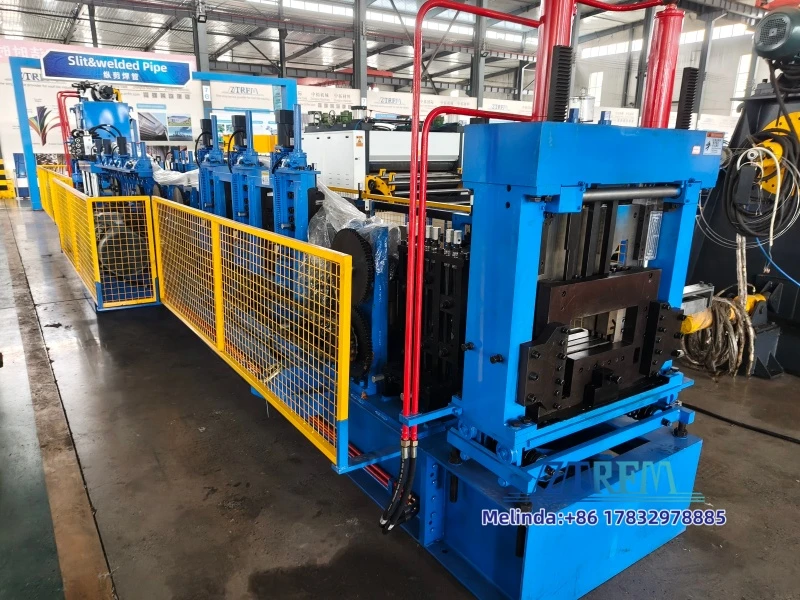
The feeding section of the Trailer Side Cover Roll Forming Machine

The forming section of the Trailer Side Cover Roll Forming Machine
Technical Specifications
The table below compiles all the key specifications for this trailer side cover roll forming machine, covering the decoiler, forming mainframe, shearing system, control panel, and hydraulic unit. It gives you a quick, complete reference for comparison.
| Category | Parameter | Value |
|---|---|---|
| Raw Material | Material Type | st37 black steel |
| Thickness | 2mm | |
| Width | approx. 870mm | |
| Machine Overall | Dimensions (L×W×H) | approx. 15000×1000×1600mm |
| Operating Voltage | 380V/50Hz/3Phase | |
| Cutting Length | adjustable | |
| Hydraulic Decoiler | Load Capacity | 5 tons |
| Dimensions | 2800×1600×1900mm | |
| Weight | approx. 3.2 tons | |
| Main Motor Power | 5.5kW | |
| Expansion Type | slider expanding with 4 support arms | |
| Auxiliary Features | hydraulic pressing arm, pneumatic brake | |
| Roll Forming Mainframe | Shaft Diameter | 115mm |
| Shaft Material | 45# steel | |
| Roller Material | CQ15, quenched | |
| Rolling Stations | 3 stations | |
| Working Speed | 0-8m/min | |
| Frame Structure | steel plate welded, plate thickness 25mm | |
| Frame Load Rating | 400t welded structure | |
| Main Motor Power | 18.5kW × 2 units | |
| Spacer Treatment | anti rust treatment | |
| Drive Type | 2 inch chain drive | |
| Straightening Rollers | 3 top + 4 bottom, 7 rollers total | |
| Feeding Device | one set of guide rollers, welded platform, width adjustable via handwheel | |
| Shearing System | Operation Type | hydraulic cutting |
| Blade Material | Cr12MoV, quenched | |
| Cut Type | Tri-blade cutting | |
| Length Tolerance | ±1mm | |
| Control System | Inverter Brand | Delta |
| PLC Brand | Delta | |
| Low Voltage Components | Schneider | |
| Encoder Brand | Omron | |
| Interface | touchscreen + physical buttons | |
| Functions Supported | length setting, batch quantity preset, cut command | |
| Hydraulic Station | Cooling Fan | included |
| Motor Power | 7.5kW | |
| Hydraulic Oil Type | #46 hydraulic oil | |
| Line Marking | all tubes and wires marked with numbers or letters | |
| Runout Table | Length | 3m × 2 units |
| Spare Parts | Encoder | 1 piece |
| Switch | 1 piece | |
| Chain | 1 piece | |
| Relay | 1 piece | |
| Tool Kit | 1 set |
What Makes the Hardware Stand Out
The shaft. It is machined from 45# steel with a diameter of 115mm and generous wall thickness. The logic here is fatigue resistance and bending strength, so the shaft holds its straightness over years of heavy loading.
The tooling. Rollers are made of CQ15 and quenched. Shearing blades are Cr12MoV and quenched. The logic here is hardness against hardness, giving these components the wear resistance to handle the scale on st37 black steel and extend the replacement cycle significantly.
The control system. We use Delta inverters and PLCs, Schneider low voltage components, and Omron encoders. The logic here is stability above all else. In regions where grid power fluctuates, quality electrical parts keep the machine running without lockups or signal loss.
The frame. It is welded from 25mm steel plate and rated for 400t loads. The logic here is rigidity under stress. A stable frame keeps all roller stations aligned and prevents vibration from compromising profile accuracy.

The cutting section of the Trailer Side Cover Roll Forming Machine
Key Advantages at a Glance
-
The 25mm welded frame and 400t rated structure keep the machine solid under continuous heavy loads, so long profiles stay straight.
-
The main shaft is precision machined from 45# steel with heat treatment, giving it the bending and torsion resistance needed for 2mm st37 black steel day after day.
-
Rollers and blades are quenched for hardness, so they resist wear from black steel scale and last far longer than ordinary tooling.
-
The electrical system uses proven brands: Delta, Schneider, and Omron. It stays stable even when grid voltage swings.
-
We are a manufacturing and trading integrated company. We own our drawings and have full control over production. That means custom spacers or special roll profiles get done more than three times faster than with a pure trading company.
-
Every hydraulic line and electrical wire is labeled with clear markings. Common wear parts come with the machine, so local electricians can handle installation and most repairs without waiting for an overseas engineer.
-
The touchscreen plus physical buttons make length and batch setting straightforward. A new operator can learn the basics in two hours and start running production.

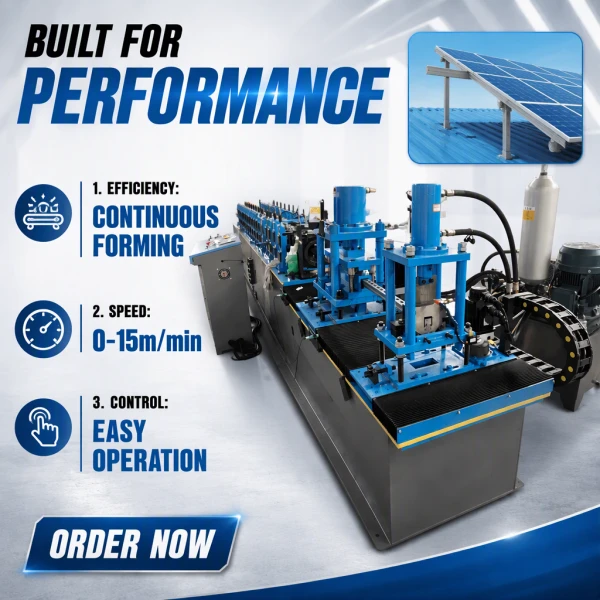
Detail display of the Trailer Side Cover Roll Forming Machine
Built for International Markets
Voltage: 380V/50Hz/3Phase as standard, with optional customization available. This covers the main industrial power standards across Southeast Asia, the Middle East, Africa, and South America.
Operation: the interface supports one touch switching between Chinese and English, so skilled technicians are not required for basic operation.
Shipping: the trailer side cover roll forming machine dimensions are approximately 15000×1000×1600mm, which fits well into a 40 foot high cube container.
Installation: all lines and cables are numbered and labeled. Local electricians anywhere in the world can complete the connection by matching the labels, with no need to fly in an engineer from overseas.

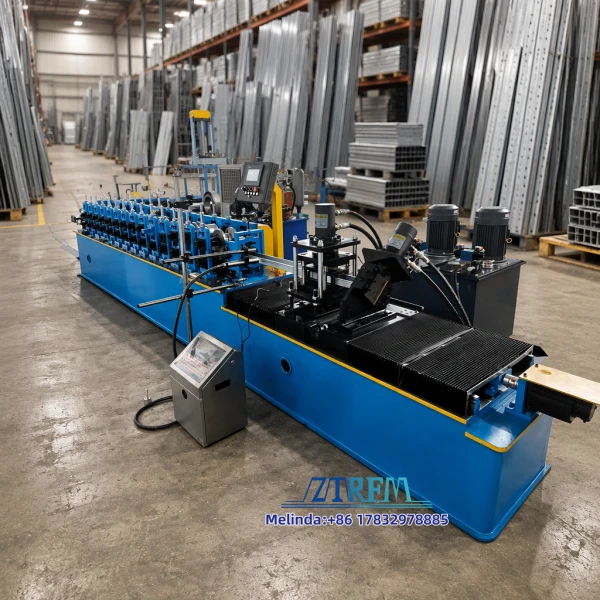
The trailer side cover roll forming machine from other perspectives
How to Get a Customized Proposal from Us
Every production line needs to match specific raw material specs and final profile drawings. When you reach out, let us know the material thickness, width range, and the target profile shape and dimensions. We will design the roll station layout and calculate the motor power based on your inputs.
A detailed profile drawing helps us confirm the roll design is right. If you are still finalizing your product design, we can also help assess formability and suggest improvements. Once we receive your complete information, we will get back to you with a preliminary solution and quote within 24 hours.
Workshop conditions and budgets vary across regions, so feel free to tell us about your floor space and target output as well. We are happy to recommend the configuration that fits your specific situation best.
Whatsapp/wechat: +8617832978885, Email:[email protected]