by melinda
Share
Metal noise barrier panels are the most common solution for reducing traffic noise along highways, railways, and urban roads. For panel manufacturers, the challenge is straightforward: how do you produce panels that meet project requirements efficiently and consistently?
The traditional approach, using separate machines for punching, forming, and cutting, creates bottlenecks. It takes more labour, slows down production, and makes it harder to keep quality consistent from one batch to the next.
A Highway Noise Barrier Making Machine combines coil feeding, punching, roll forming, and cut to length cutting into one continuous process. It takes metal coils, such as galvanized steel, pre coated steel, or aluminum, and turns them into finished acoustic panels.
This guide covers panel applications, technical specifications, the manufacturing process, and equipment selection.

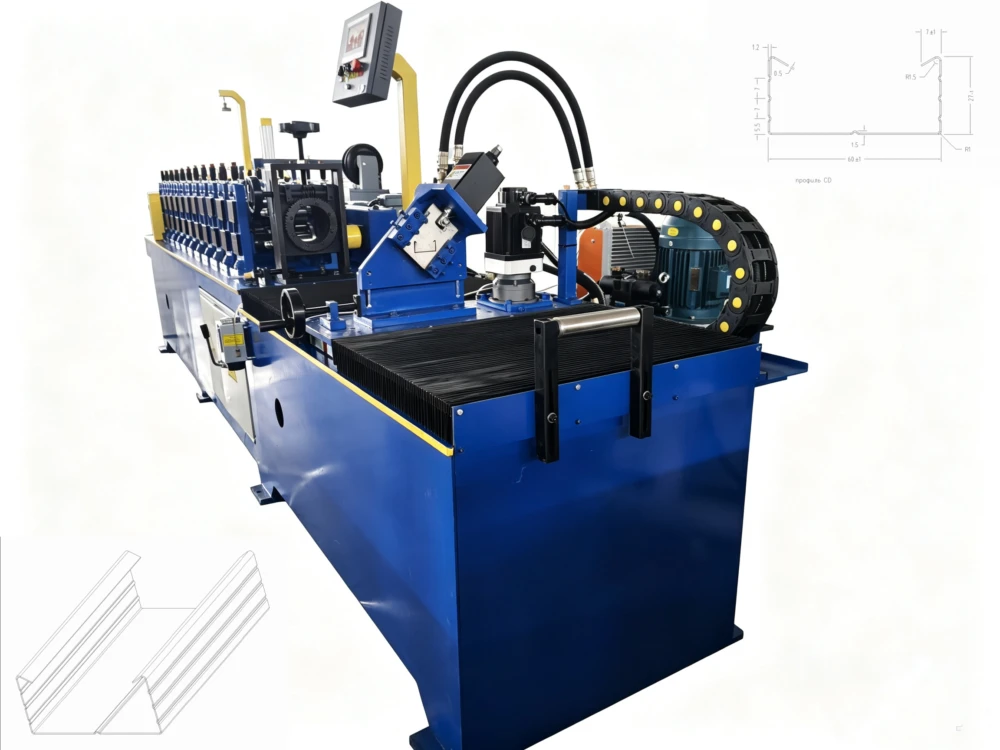
Highway Noise Barrier Making Machine
What Is a Highway Noise Barrier Making Machine and What Does It Produce?
1.1 What Is a Metal Noise Barrier Panel?
A metal noise barrier panel is a sound dampening panel installed along highways, railways, and city roads. Its job is to block traffic noise from reaching nearby residential areas, schools, and hospitals. Most panels are made from galvanized steel, aluminum, or pre coated steel, with thicknesses typically ranging from 0.8mm to 1.2mm.
Panels come in different acoustic types to suit different project needs. Some reflect sound, others absorb it, and some do both.

Metal Noise Barrier Panel
1.2 Main Application Scenarios
Highways
Highway traffic moves fast and generates a wide range of noise frequencies. Panels are installed along both sides of the road to protect nearby communities. This is the largest and most common application.
Urban Elevated Roads and Overpasses
Elevated roads cut through densely populated city areas, so noise reduction requirements are often stricter.
Railways and Intercity Rail
High speed rail lines and intercity train routes also need noise barriers. Tunnel entrances and embankment sections have additional demands, like higher structural strength.
Industrial Sites and Equipment Noise Control
Large machinery, cooling towers, and substations generate noise that needs to be contained. Metal acoustic panels are often used as enclosures around industrial equipment. A Sound Proof Panel Roll Forming Machine enables manufacturers to produce these panels in house.
1.3 From Application to Equipment
As noise barrier projects increase, so does the demand for panels. For manufacturers, buying pre perforated sheets from outside suppliers means higher costs, unpredictable lead times, and limited flexibility for custom orders.

Metal Noise Barrier Panel Application Scenarios
Bringing production in house, from raw coil to finished panel, gives you control over cost, quality, and delivery. And to do that efficiently, you need a proper Highway Noise Barrier Making Machine.
Technical Specifications – What Parameters Should Buyers Check?
A machine's technical specs tell you what it can do, what materials it handles, and how it runs. Here are the core parameters for this Sound Proof Panel Roll Forming Machine, based on the actual manufacturer configuration.
| Parameter | Value |
|---|---|
| Applicable Materials | PPGI, GI, Aluminum |
| Material Thickness | 0.8 – 1.2mm |
| Forming Stations | 32 rows (customizable) |
| Main Shaft Diameter | 80mm solid shaft |
| Roller Material | 45# steel, hard chrome plated |
| Frame Structure | 500 H steel |
| Drive System | Chain transmission |
| Machine Size (L×W×H) | 9500×1600×1600mm (customizable) |
| Machine Weight | Approx. 15 tons |
| Main Motor Power | 7.5KW |
| Hydraulic System Power | 7.5KW |
| Forming Speed | 15-20m/min (depends on profile and thickness) |
| Power Supply | 380V 50Hz 3 phase (customizable) |
| Control System | PLC automatic control with touch screen |
| Operating Language | English (multi-language supported) |
Understanding the Key Parameters
Forming Stations (32 rows)
More forming stations mean a more gradual forming process. The material bends step by step, which helps maintain accuracy and surface quality. 32 rows is the standard configuration and works well for most panel profiles.

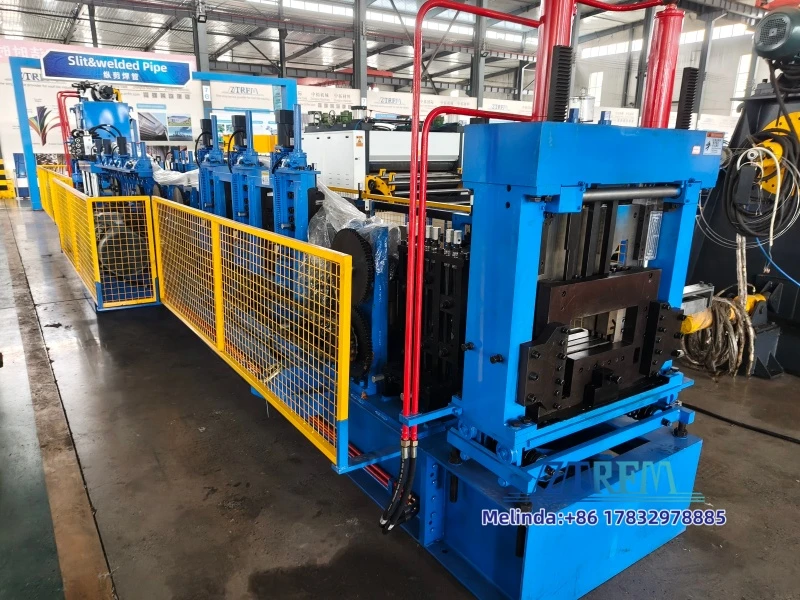
Forming Stations
Roller Material (45# steel, hard chrome plated)
The rollers do the actual forming work. Hard chrome plating gives the roller surface good hardness, which supports forming precision over time.

Highway Noise Barrier Making Machine Roller
Frame Structure (500 H steel)
The frame supports the entire machine. A 500 H steel frame stays rigid under load, helping the machine maintain its forming accuracy during production.

Frame Structure
Forming Speed (15-20m/min)
Speed depends on the profile complexity and material thickness. More complex shapes or thicker materials may need slower speeds to maintain quality.
Key Advantages of Using a Roll Forming Machine for Noise Barrier Production
Once you know the specs, the next question is: what do these numbers actually deliver? Here is what this equipment brings to your shop floor.
3.1 Integrated, Automated Production
The old way means three separate steps, punching, forming, and cutting, on different machines. Each step needs its own operator, and materials move between stations constantly.
This production line combines all three into one continuous flow:
-
Line 1 – Punching: decoiler → servo feeder → punching machine → damping system → recoiler
-
Line 2 – Forming: punched coil feeds into the roll forming machine
-
Line 3 – Assembly: workers join two panels together and add sound absorbing filler

Production Line Combines
Coil goes in. Finished panels come out. Minimal manual handling in between.
3.2 Punching System
The acoustic performance of a noise barrier panel depends on the holes, including hole shape, size, and spacing. Even small deviations affect the sound absorption.
This machine uses a servo driven punching system. Hole spacing accuracy is within ±0.2mm. Manufacturers can also remove specific punches from the die tool to create custom hole patterns for different project requirements.
3.3 Forming Quality
Three factors work together to maintain quality:
-
32 forming stations shape the panel gradually
-
45# steel rollers with hard chrome plating maintain dimensional accuracy
-
500 H steel frame keeps the machine rigid under load

Roller and frame
3.4 Continuous Production
At 15-20m/min, this line handles high volume orders. For large highway projects that require thousands of panels, continuous production is what makes on time delivery possible.
3.5 Automation and Operation
-
PLC automatic control lets you set batch size, length, and quantity
-
Touch screen interface supports English and other languages
-
Built in alarms cover material shortage, count target reached, emergency stop, and limit position protection
All of this reduces the need for constant operator attention.
How Are Highway Noise Barrier Panels Manufactured?
Now that you understand the machine, let us walk through the actual production process, from raw coil to finished panel.
4.1 Raw Material Preparation
Everything starts with metal coils. Common materials include galvanized steel (GI), pre painted galvanized steel (PPGI), and aluminum. Thickness ranges from 0.8mm to 1.2mm. Coil width varies depending on the final panel size.
4.2 Stage 1: Punching
Punching is the critical step for acoustic performance. The holes on the panel determine how well it absorbs sound.
The punching line works like this:
Decoiler feeds the coil → Servo feeder controls feed length → Punching machine creates the holes → Damping system absorbs vibration → Recoiler rewinds the punched coil

punching line works
After punching, the coil is rewound and ready for the next stage.
4.3 Stage 2: Roll Forming
The punched coil moves into the Highway Noise Reduction Panel Machine for forming:
-
The sheet passes through 32 forming stations
-
Each station applies a small, gradual bend
-
By the end of the line, the flat sheet has become the required panel profile
Roll forming is a cold forming process. It shapes the metal at room temperature, so the material's internal structure stays intact.

The multi-pass forming rollers of the Highway Noise Barrier Making Machine
4.4 Stage 3: Assembly and Filling
A single formed panel is not a finished noise barrier yet. Most acoustic panels are double layer. Two formed panels go together with sound absorbing material in between.
This step is currently done manually. Workers align two panels, place insulation material between them, and assemble the finished panel.
4.5 Roll Forming vs Traditional Stamping
| Aspect | Roll Forming | Traditional Stamping |
|---|---|---|
| Production Flow | Continuous coil feed | Stop and start per piece |
| Efficiency | 15-20m/min steady speed | Slower cycle times |
| Consistency | Automated process | More manual variation |
| Process Integration | Punching + forming + cutting in one line | Multiple machines, multiple steps |
What Equipment Makes Up a Noise Barrier Production Line?
A noise barrier production line is not one machine. It is a complete system centered around the Highway Noise Barrier Making Machine. Here are the core components and what each one does.
5.1 Core Components
| Component | Function |
|---|---|
| Decoiler | Holds and feeds the metal coil. Hydraulic automatic decoiler is standard; manual decoiler is included as a complementary option. |
| Servo Coil Feeder | Controls feed length and speed for accurate hole placement. |
| Punching Machine | Creates perforations and louvered holes. Servo driven. |
| Damping System | Absorbs vibration during punching. |
| Recoiler | Rewinds the punched coil for the forming stage. |
| Roll Forming Machine | 32 forming stations that gradually shape the profile. |
| Cut to Length Device | Cuts the formed panel to size. |
| Control System | PLC automatic control with touch screen interface. |
5.2 Line Layout and Customization
The standard machine footprint is 9500mm (L) × 1600mm (W) × 1600mm (H), with a total weight of about 15 tons. Dimensions can be customized to fit your workshop space.
The standard power supply is 380V 50Hz 3 phase, but the system can be adapted to local grid specifications.

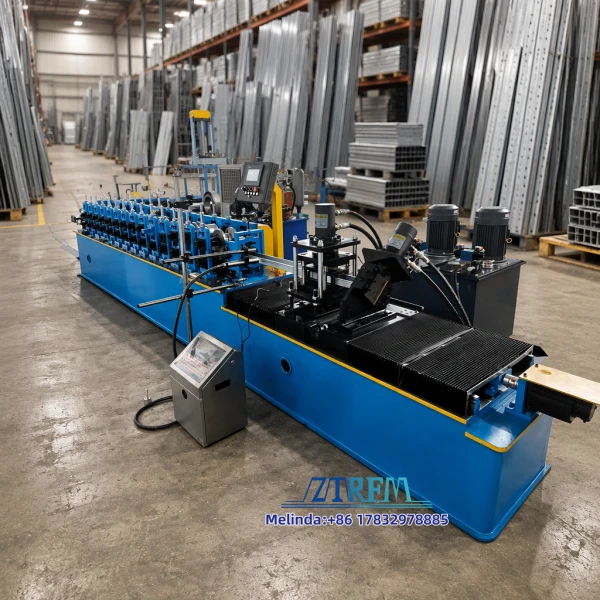
Overall presentation of the Highway Noise Barrier Making Machine
H2 6: What Buyers Often Worry About and How We Address Those Concerns
Purchasing a Sound Proof Panel Roll Forming Machine is a significant investment. Buyers frequently ask the same questions. Here are the most common concerns we hear, along with how we handle each one
6.1 Concern: Will the supplier still support me after the sale?
Some buyers report that overseas suppliers become unresponsive once the payment clears.
What we do:
-
Offer one stop service from order to operation
-
Provide clear communication throughout the process
-
Respond to technical questions promptly
-
Support during installation and commissioning
6.2 Concern: Does the machine meet international quality standards?
Buyers worry about safety compliance and quality certification for export.
What we do:
-
Hold recognized quality certifications
-
Build to international manufacturing standards
-
Use branded electrical components
-
Provide documentation for compliance
6.3 Concern: Can I customize the machine for my specific needs?
Buyers worry a standard machine won't fit their unique production requirements.
What we do:
-
Offer ODM and OEM services
-
Customize machine size and voltage
-
Adjust forming stations to your profile
-
Provide tailored die tooling options
6.4 Concern: Will my workers be able to operate this machine?
Buyers worry about language barriers and complex controls.
What we do:
-
Support multiple languages including English
-
Design portable PLC for easy operation
-
Provide clear training before shipment
-
Simplify the control interface

The cutting part and control cabinet of the Highway Noise Barrier Making Machine

Details of the cutting part of the Highway Noise Barrier Making Machine
This guide covers the key aspects of highway noise barrier production, including panel applications, machine specifications, manufacturing processes, and supplier selection. If you are looking for a quotation or need help configuring a line for your specific project, contact us. We are happy to discuss your requirements and answer technical questions about the Highway Noise Barrier Making Machine.
Whatsapp/wechat: +8617832978885, Email:[email protected]