by melinda
Share

Fence Post Machine
A fence post machine is the kind of equipment that sits at the heart of any serious fencing operation. Anyone in the fencing business knows this feeling: you land a big order for thousands of posts, and the deadline is tight. With traditional methods, you can't keep up. Buy equipment, and you worry about picking the wrong model.
Equipment investment runs into tens or even hundreds of thousands. Get it wrong, and it takes up shop floor space without delivering returns. Can your workers learn to run it, will the machine run reliably, and will the finished posts meet quality requirements? A fence post machine addresses these concerns directly.
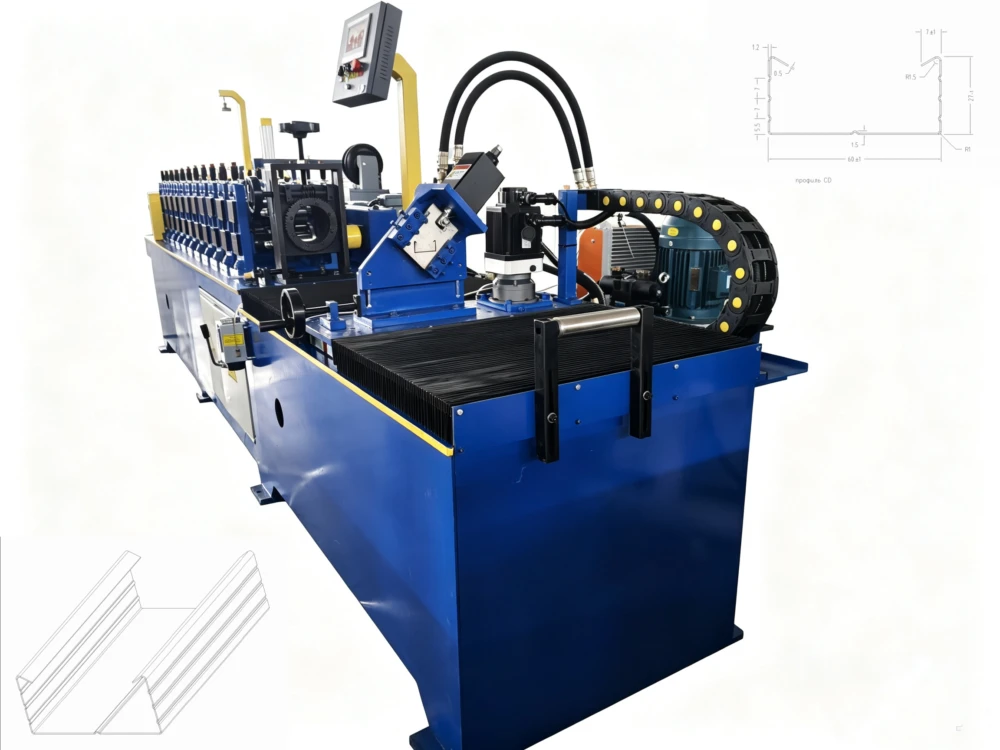
This fence post machine combines uncoiling, punching, roll forming, and cutting into one continuous production line. The steel coil goes in one end. Set the length and quantity on the touchscreen, and the machine handles punching and forming automatically. Finished posts come out the other end.
Applications
[Image placeholder: collage of fence post applications: farms, highways, residential areas, vineyards]
-
Agricultural and ranch fencing. Boundary fences for cattle and sheep farms, plus support systems for vineyards and orchards.
-
Highway and infrastructure. Post supports for highway guardrails and safety barriers.
-
Industrial parks and commercial facilities. Perimeter security posts around factories, warehouses, and logistics centers.
-
Residential and community. Boundary fence supports for gardens, housing estates, schools, and parks.
-
Temporary and special uses. Construction site barriers, event fencing, and emergency response enclosures.
Different applications need different post profiles, material thicknesses, and surface finishes. A rollforming fence machine handles multiple profiles by switching roller tooling, making it a versatile choice for fencing manufacturers.

The application of the finished products of the fence forming machine
Key Advantages of the Fence Post Forming Machine
-
Continuous forming reduces manual handling and eliminates repositioning errors between steps.
-
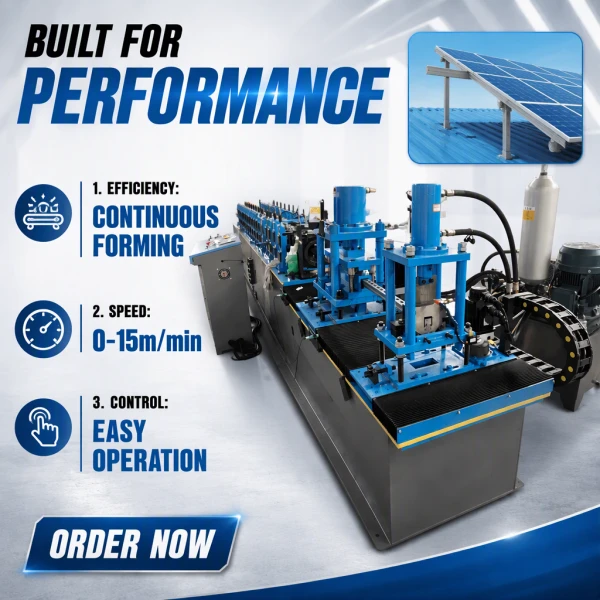
Punching and forming happen in sync, which boosts line efficiency.
-
PLC control system simplifies machine operation.
-
The machine frame uses thick welded steel plates for structural rigidity during long production runs.

Full Automatic Fence Panel Roll Forming Machine Frame
Common Fencing Profiles

Uses of Different Fences
Different fencing systems require different post profiles. A palisade fence uses pointed vertical bars for security around schools and parks. Chain link fencing needs round or Y section posts to support woven wire. Welded mesh panels work with C section or U section posts for industrial barriers. Highway guardrails require specific channel posts that meet road safety standards. When selecting a fence post machine, the range of profiles you plan to produce determines the tooling setup.
How Fence Posts Are Manufactured
-
Raw material preparation. Steel coil feeds from the decoiler and passes through a leveler to remove coil curl.
-
Punching. Mounting holes and slots are punched while the strip is flat. A PLC with encoder controls hole positions.
-
Progressive forming. The strip goes through roller stations, each adding a small bend. The metal flows gradually into shape at room temperature.
-
Cut to length. A hydraulic shear cuts when the strip reaches the set length. Cuts are clean, and finished posts collect at the end.
Cold roll forming uses no heat, so the coating stays intact. This helps finished posts resist corrosion over time.

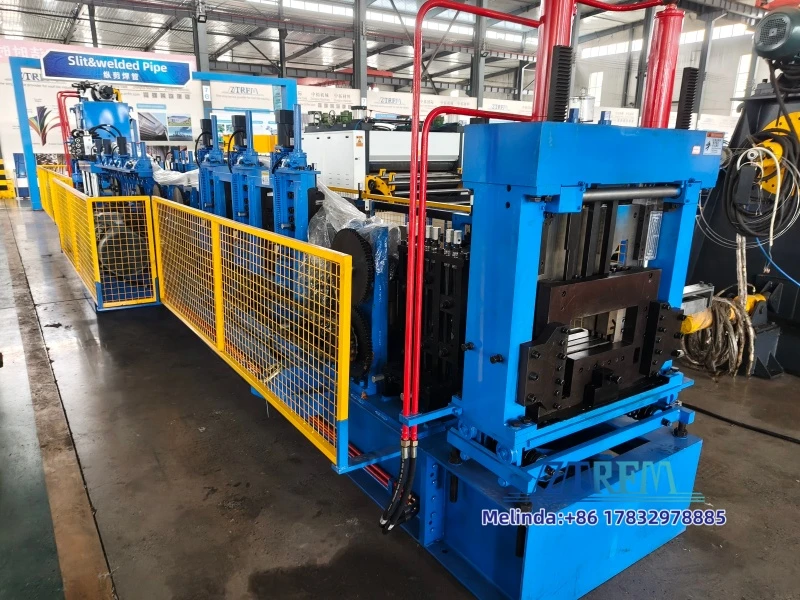
The feed port of the Fence Panel Roll Forming Machine

Details presentation

The cutting section of the Fence Panel Roll Forming Machine

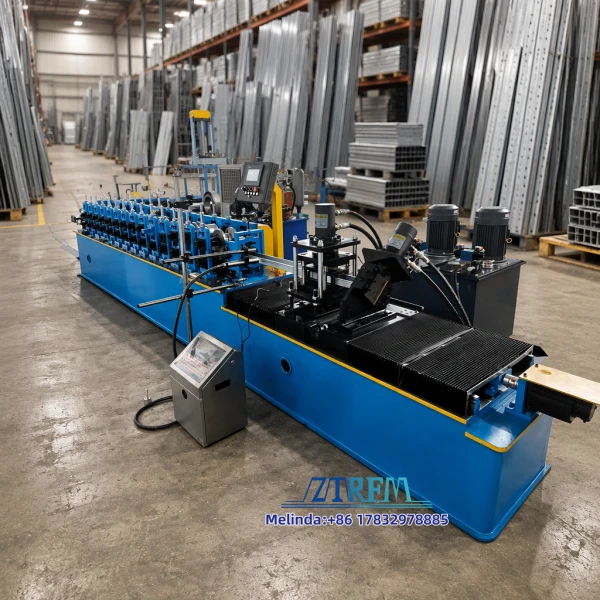
The entire production line of the Fully Automatic Fence Panel Roll Forming Machine
Technical Reference Parameters
[Image placeholder: machine overview with key components labeled]
Below are typical technical parameters for this fence post machine, based on standard industry configurations. Final specifications depend on the actual machine configuration.
| Parameter | Typical Value (reference only, subject to final configuration) |
|---|---|
| Material thickness range | 1.0 – 2.5 mm |
| Material width range | 80 – 200 mm |
| Forming speed | 15 – 35 m/min |
| Forming stations | 12 – 18 sets |
| Main motor power | 7.5 – 15 kW |
| Hydraulic system power | 4 – 7.5 kW |
| Cutting accuracy | ± 1 mm |
| Roller material | GCr15 bearing steel, HRC 58–62 |
| Machine weight | 8 – 12 tons |
Other Equipment from the Same Manufacturer
-
Metal Fencing Machine – Fence Panel Roll Forming Machine
-
Chain Link Fence Machine
-
Palisade Fence Roll Forming Machine
-
Wire Mesh Welding Machine

The other production lines of the company
We started in 2014 and focus on designing and manufacturing cold roll forming equipment. We provide forming solutions for fence post production and related lines. Our equipment serves metal processing businesses in many countries.
Whether you're planning a new production line or upgrading existing equipment with a reliable fence post machine, we're here to offer practical advice. Contact our sales team for full specifications and a quote. We look forward to working with you.