by melinda
Share
Metal fences are everywhere. On farms, around houses, in industrial parks, along infrastructure projects. A metal fencing machine turns a flat steel coil into a finished panel. But how exactly does that happen?
This article walks through the complete roll forming process. It explains each production step and shows how the equipment helps get the job done.

Metal Fencing Machine
What Is a Metal Fence Plank?
A metal fence plank is a fence component made through a cold forming process. It works with posts to create a complete fencing system. Planks can be vertical or horizontal, and the cross section changes with the design.
Dura Fence is a popular metal fencing product in many markets. Both planks and posts can be produced in bulk using roll forming technology. A fence post machine can also make the supporting posts for the system.

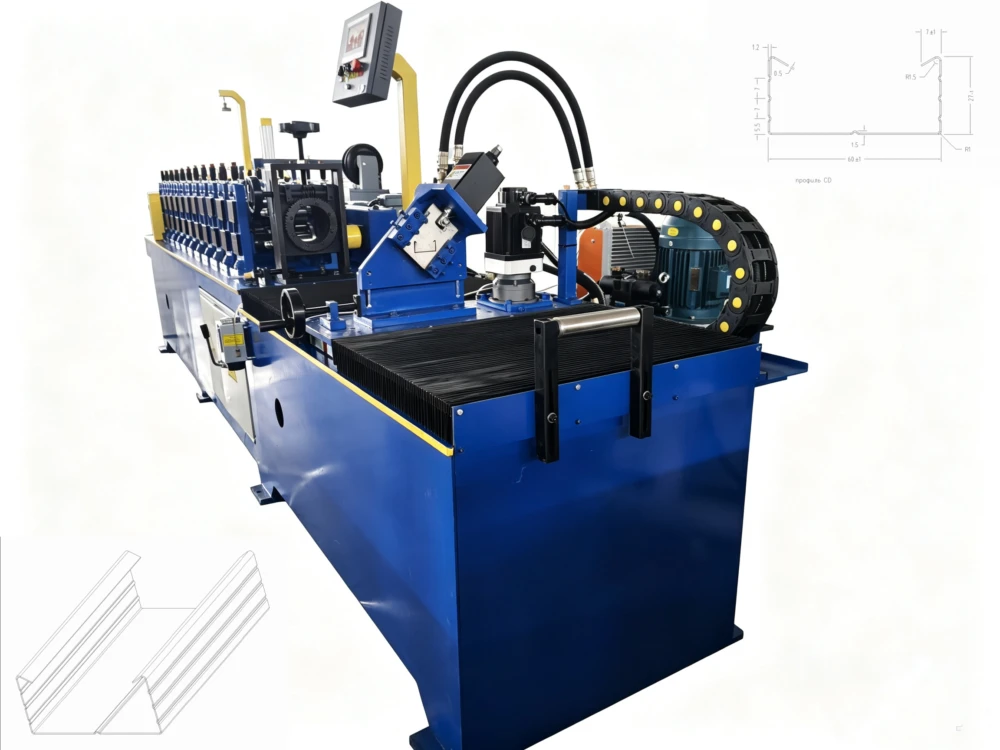
Metal Fencing Machine - Finished Product
What Material Is Used for Metal Fence Planks?
The most common material for fence planks is galvanized steel (GI). The zinc coating protects the steel from rust, making it ideal for outdoor use.
Key features of galvanized steel fence planks:
-
Strong corrosion resistance. The zinc layer shields the base material.
-
Good impact strength. Steel offers solid structural performance.
-
Low maintenance. Less painting and regular care needed.
-
Good formability. Galvanized steel handles roll forming well.
Some products use PPGI or alum zinc coated steel, but galvanized steel remains the most common choice.

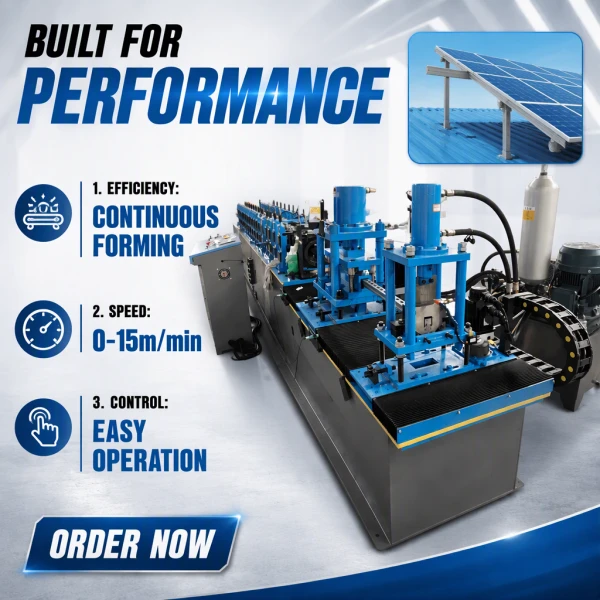
The application of the finished products of the fence forming machine
Key Parameters of a Metal Fencing Machine
Before we get into production, let us look at the basic setup of a typical metal fencing machine.
| Parameter | Description |
|---|---|
| Material | Galvanized steel (GI) |
| Forming method | Roll forming |
| Control system | PLC automatic control |
| Cutting method | Automatic hydraulic cutting |
| Drive system | Chain transmission |
Note: this table shows a general configuration. Actual specifications depend on equipment and product needs.
Step by Step Manufacturing Process for Metal Fence Planks
Here is the complete production flow from steel coil to finished fence plank:
1. Decoiling. Load the steel coil onto the decoller and unroll it into a flat strip.
2. Feeding and guiding. Guide the strip into the forming machine at the right angle.
3. Roll forming. Pass the strip through multiple roller stations to gradually bend it to the target shape.
4. Cutting to length. Cut the formed plank automatically at the preset length.
5. Output and stacking. Move finished planks out, inspect, and stack for packing.
The whole system runs continuously and automatically. It turns a coil into finished planks in one pass. Roll forming is the core step. The strip goes through gradual deformation stage by stage. More forming stations generally mean better precision. The other steps, like decoiling, feeding, cutting, and stacking, support the main operation and keep the line running smoothly.

Metal Fencing Machine - The feeding and molding section application

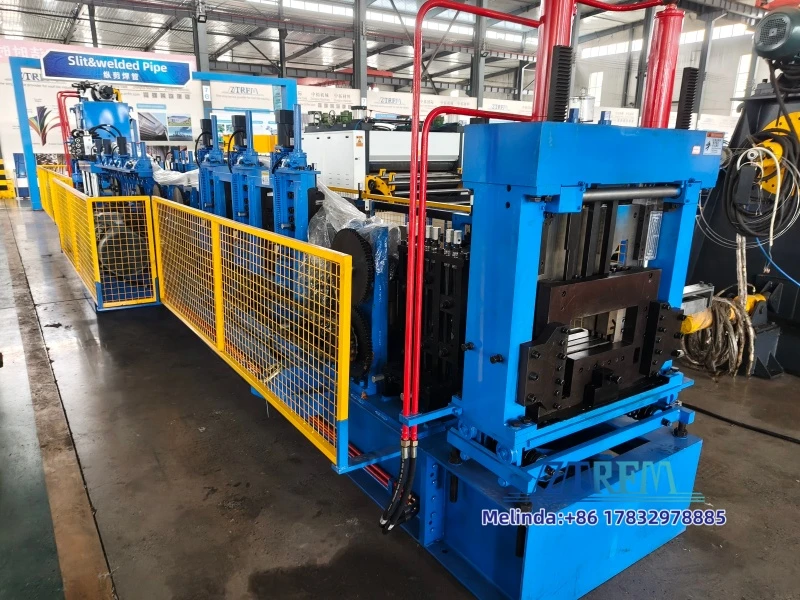
Metal Fencing Machine - Multiple Angles for Cutting Section
Advantages of a Metal Fencing Machine in Production [Advantages]
Here is what a metal fencing machine brings to the production line:
-
Continuous high volume production. Runs for long periods and handles large orders.
-
High automation. The PLC system manages settings and reduces manual work.
-
Good material utilization. Continuous forming cuts down on end trim scrap.
-
Streamlined workflow. From coil to finished plank on one machine. No need to move material between separate units.

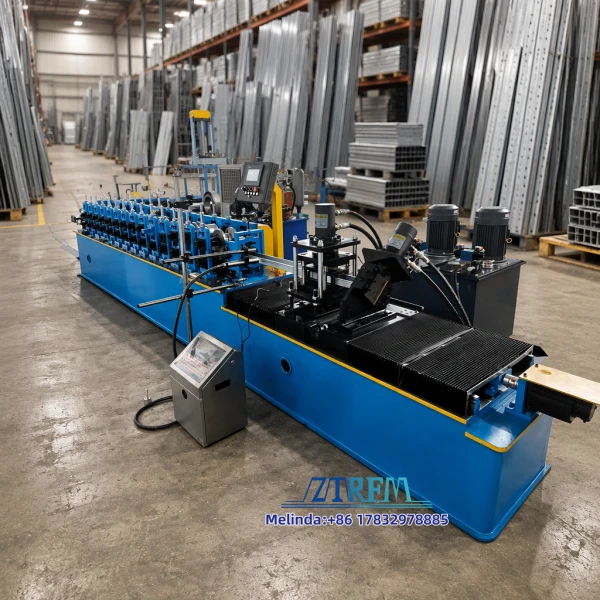
Metal Fencing Machine - Cutting and Forming Section

Metal Fencing Machine - Feeding Section
Frequently Asked Questions
What is the most common material for fence planks?
Galvanized steel. It offers a good balance of corrosion resistance and cost.
How is roll forming different from other metal forming processes?
Roll forming is continuous cold bending. It uses multiple roller stations to shape material gradually. It works well for long profiles made in high volume.
What affects the quality of a roll formed fence plank?
Key factors: material thickness and grade, number of forming stations, roller precision, machine rigidity, and production speed.

Metal Fencing Machine - Cutting Section
Conclusion
Turning a galvanized steel coil into a finished fence plank is efficient, thanks to roll forming. Understanding the process helps buyers evaluate equipment more clearly. It also helps production teams control each step with confidence.
To learn more about the metal fencing machine, check out our other articles or reach out to our sales team for professional advice.
Whatsapp/wechat: +8617832978885, Email:[email protected]