by melinda
Share
When you are preparing to enter the plaster corner bead processing field, facing a production line made up of several pieces of equipment, do you find it hard to know where to start?
Our plaster corner bead machine offers a complete solution. Buying this kind of equipment for the first time is tricky. What you fear most is not having the right information. Our production line runs automatically from uncoiling to material receiving. It helps you produce high quality plaster corner beads steadily and avoids all sorts of hidden problems later on.
This equipment takes galvanized steel coil as its raw material. It goes through punching, roll forming, and cut to length cutting to give you high quality plaster corner bead products. This article will break down the equipment composition and selection points of this production line. It helps you build a clear path from understanding the whole line to making a buying decision.

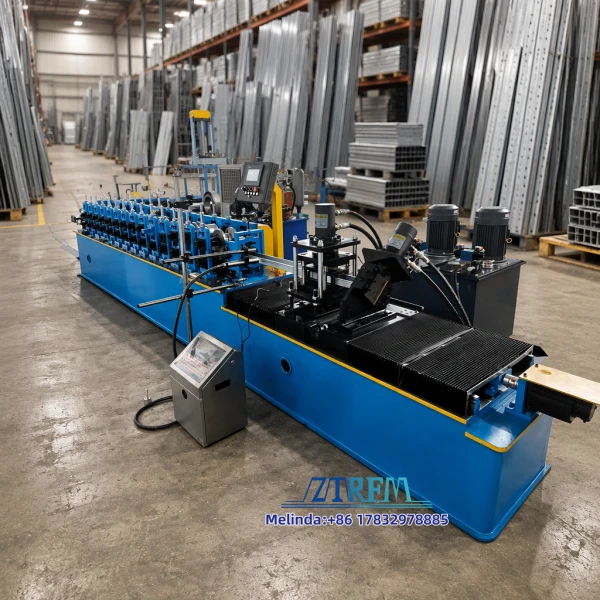
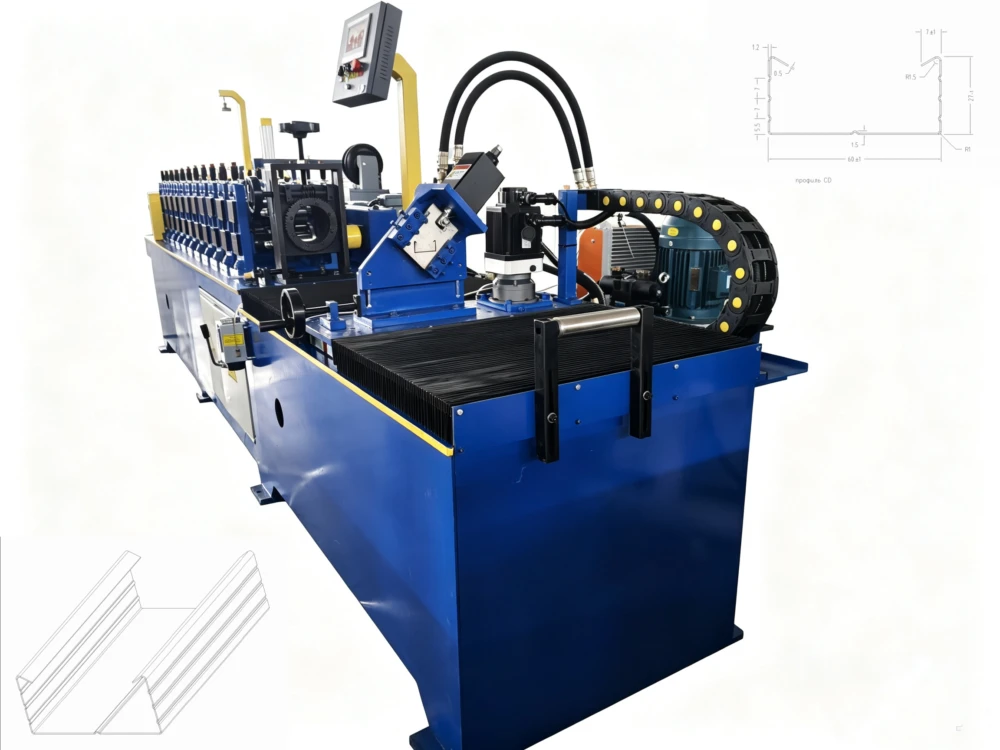
Plaster Corner Bead Machine
Line Overview
Well, you might worry about whether the whole line works smoothly together. The connection between each stage is coordinated by the PLC control system. This ensures the production rhythm stays highly synchronized.

Plaster Corner Bead Machine Line Overview
A complete plaster corner bead production line follows this work flow:
Hydraulic decoiler with drag rollers-----Punching machine 16 T----Servo feeding device---roll forming machine-------cutting part---Runout table
-
The hydraulic decoiler carries 3 tons of steel coil. It fits an inner diameter of 450 to 550 millimeters. The hydraulic expansion and shrink system controls the spindle to hold the coil tight.
-
The 16T punching machine comes from the YangLi brand. It works with the servo feeder to complete high precision punching.
-
The servo feeding device controls the feed length precisely. This ensures hole spacing stays consistent and cut lengths remain accurate.
-
The main roll forming machine has 11 forming stations. The rollers are made of Cr12 material with quenching and hard chrome plating treatment. The roller shafts use 45# steel with a shaft diameter of 50 millimeters.
-
The hydraulic cutting system uses servo hydraulic cutting. The blade material is Cr12, giving clean cuts without burrs.
-
The runout table is 3 meters long. It uses a square tube welded structure to receive the finished angle steel after forming and cutting.
Core Technical Advantages
This equipment has several features worth attention in material selection and process design. Let us go through each one.
Frame Structure: Steel Plate Welded
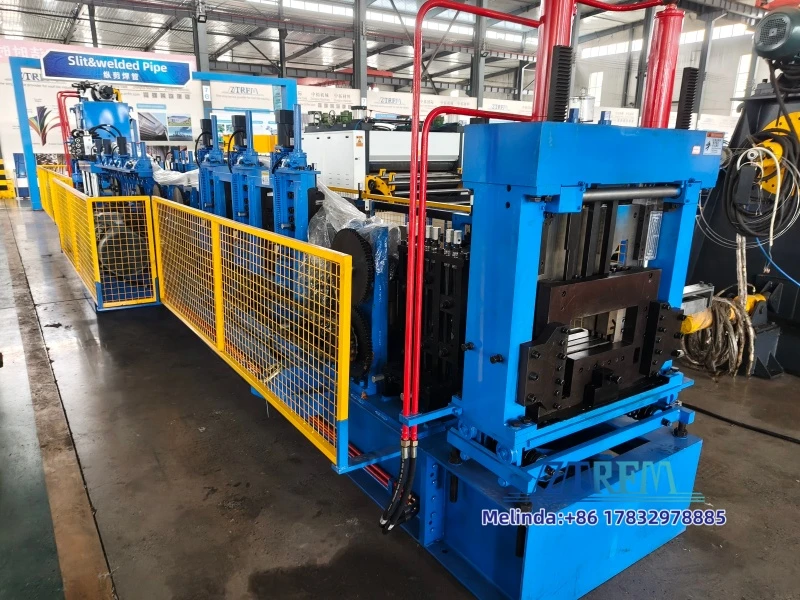
This machine uses a steel plate welded frame. The steel plate welded structure performs stably under the continuous stress from angle steel forming. The welding process goes through strict quality control. This ensures the machine frame does not deform over long term use.

Plaster Corner Bead Machine Steel Plate Welded
Roller Material: Cr12 Quenched and Hard Chrome Plated
The Cr12 rollers with quenching and hard chrome plating give a surface hardness much higher than ordinary die steel. This means longer roller change cycles and more stable profile surface quality. High quality rollers let you run tens of thousands of meters of product continuously without worrying about surface scratches or size deviations.

Plaster Corner Bead Machine Roller
Accuracy Assurance: Servo Feeder and PLC Work Together
The servo feeding system and PLC control system work together. They ensure every piece of angle steel has consistent hole positions and accurate length. This is the core mechanism that guarantees the whole line's precision.

Servo Feeder and PLC Work Together
Process Sequence: Punch First, Then Form
The angle steel gets punched while the sheet is flat, then goes into the forming stage. This sequence avoids deformation that could happen if you punch an already formed angle. Punching on a flat sheet gives the highest accuracy. The hole positions do not shift during the subsequent forming process.

Plaster Corner Bead Machine Punch
Power and Energy Consumption: 5.5kW Main Motor plus 3.0kW Hydraulic Station
The main motor is 5.5 kilowatts. The hydraulic station is 3.0 kilowatts and comes with a cooling fan. This combination provides enough punching force and forming power while keeping energy costs reasonable. During long runs, the cooling fan controls the hydraulic oil temperature effectively. This keeps the system stable during extended operation.

Hydraulic Station
Easy Installation: Numbered Pipe and Wire Marking
Have you ever faced a mess of pipes and wires and did not know where to start? The hydraulic pipes and electrical wires all have number and letter markings. You just match the numbers during installation. You do not need to spend time figuring out which pipe goes where. Even operators doing this for the first time can complete the connection work easily.
Technical Data Sheet
| Item | Specification |
|---|---|
| Raw material | Galvanized steel coil |
| Processing thickness | 0.3 to 0.6 mm |
| Decoiler capacity | 3 tons |
| Decoiler inner diameter range | 450 to 550 mm |
| Punching machine tonnage | 16 tons |
| Punching machine brand | YangLi |
| Number of forming stations | 11 stations |
| Roller material | Cr12, quenched, hard chrome plated |
| Roller shaft material | 45# steel |
| Roller shaft diameter | 50 mm |
| Main motor power | 5.5 kW |
| Working speed | 0 to 24 m/min |
| Hydraulic station power | 3.0 kW |
| Hydraulic oil type | 46# oil |
| Cooling system | With cooling fan |
| Frame structure | Steel plate welded |
| Control system | PLC control with servo feeding |
| Cutting method | Servo hydraulic cutting |
| Runout table length | 3 meters |
| Working voltage | 380V, 50Hz, 3 phase |
Application Areas
The plaster corner bead produced by this equipment fits the following industries:
-
Power and communication tower manufacturing
-
Storage racking systems
-
Electrical cabinet and distribution box frames
-
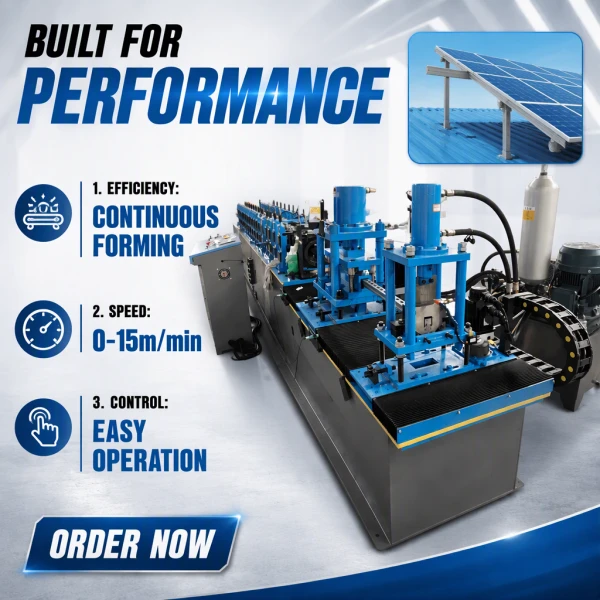
Solar tracking and fixed mounting brackets
-
Steel structure bridges and building connectors

Application Areas
Buying Checklist for First Time Buyers
Now that you understand the line composition and application areas, there are a few core questions to confirm before you ask for a quote or sign a contract. This helps you avoid buying risks and ensures the equipment fits your actual production needs.
You might worry about finding out the equipment does not suit you after purchase. Asking these questions early saves much more trouble than fixing problems later.
-
Can the processing materials, thickness range, and hole types be customized to my product needs? Can the punching method handle my special hole size requirements?
-
Can the equipment color, working voltage, and number of forming stations be customized? For export to different countries with different voltage standards, can the machine adapt?
-
How is the installation, commissioning, and operation training arranged? Does the supplier send technical staff to guide on site? What are the acceptance standards for the first trial run?
-
For the wear parts in the supply list, how many spare parts does the supplier recommend keeping in stock? What is the lead time and cost for ordering parts later? How long is the equipment warranty period?
Choosing a suitable plaster corner bead production line is really about matching your product positioning, production planning, and equipment configuration. We hope this guide provides a useful reference framework for your evaluation.

The unwinding machine of the Plaster Corner Bead Machine
If you have questions about specific parameters or processing details, or if you want a deeper technical discussion about particular profiles, please feel free to contact our team. We are happy to provide analysis and suggestions based on your specific needs and help you find the production solution that fits you best.
whatsapp/wechat: +8617832978885
Email:[email protected]