by melinda
Share
You might be searching "what is the purpose of corner beads" and find too many options out there, not sure which solution fits your production scale best.
We truly understand your concerns. Choosing a roll forming system means thinking about investment return, worker skill levels, and delivery deadlines all at once.
Our angle bead roll forming machine takes galvanized steel coil and completes uncoiling, punching, forming, and cutting in one automatic process. This guide helps you move from "what is the purpose of corner beads" to "how to produce them efficiently."

Angle Bead Roll Forming Machine
Production Process
You might worry about whether the whole line works smoothly together. The stages are coordinated by the PLC control system. This ensures the production rhythm stays highly synchronized.
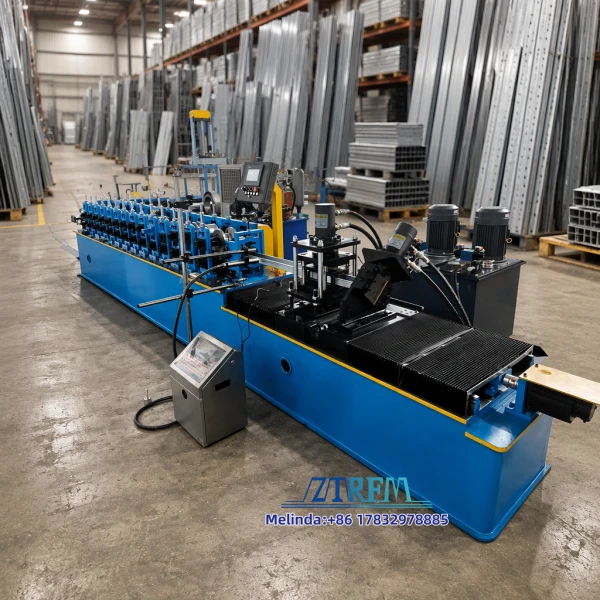
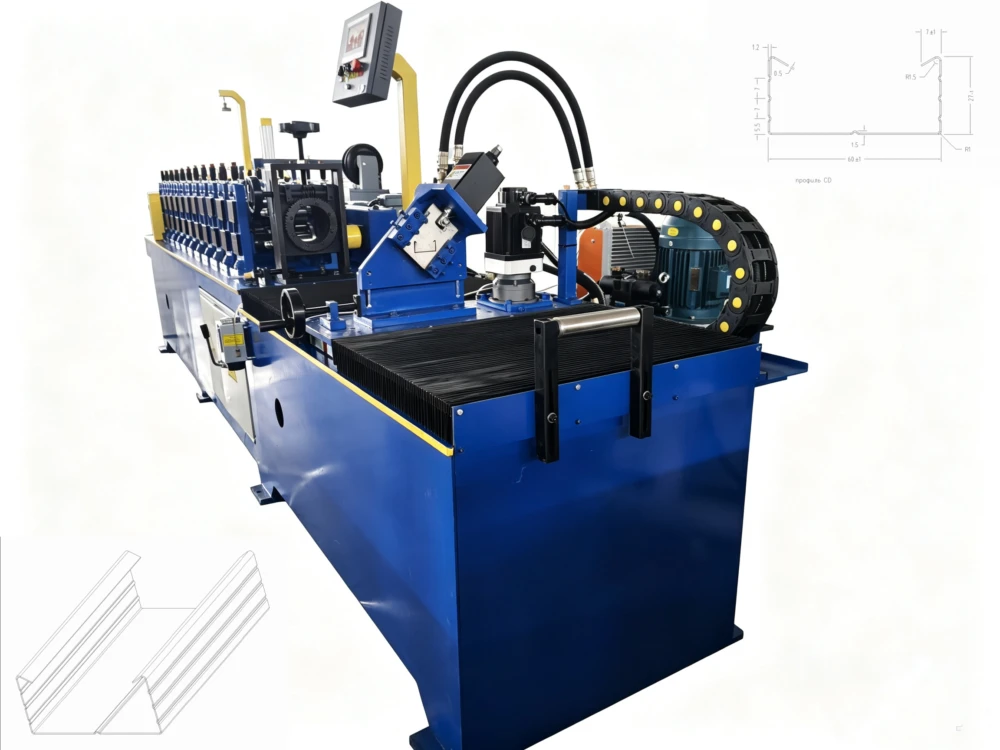
A complete angle bead roll forming line follows this work flow: hydraulic decoiler with drag rollers, 16T punching machine, servo feeding device, roll forming machine, hydraulic cutting system, and runout table.
Each core component does its job and works with the others to change the steel coil into finished corner beads:
-
The hydraulic decoiler carries 3 tons of steel coil. It fits an inner diameter of 450 to 550 millimeters. The hydraulic expansion and shrink system controls the spindle to hold the coil tight.
-
The 16T punching machine comes from the YangLi brand. It works with the servo feeder to complete high precision punching.
-
The servo feeding device controls the feed length precisely. This ensures hole spacing stays consistent and cut lengths remain accurate.
-
The main roll forming machine has 11 forming stations. The rollers are made of Cr12 material with quenching and hard chrome plating treatment. The roller shafts use 45# steel with a shaft diameter of 50 millimeters.
-
The hydraulic cutting system uses servo hydraulic cutting. The blade material is Cr12, giving clean cuts without burrs.
-
The runout table is 3 meters long. It uses a square tube welded structure to receive the finished corner beads after forming and cutting.

Plaster Corner Bead Machine Steel Plate Welded
Core Technical Advantages
This equipment has several features worth attention in material selection and process design. Let us go through each one.
Frame Structure: Steel Plate Welded
This machine uses a steel plate welded frame. The steel plate welded structure performs stably under the continuous stress from corner bead forming. The welding process goes through strict quality control. This ensures the machine frame does not deform over long term use.
Roller Material: Cr12 Quenched and Hard Chrome Plated
The Cr12 rollers with quenching and hard chrome plating give a surface hardness much higher than ordinary die steel. This means longer roller change cycles and more stable profile surface quality. High quality rollers let you run tens of thousands of meters of product continuously without worrying about surface scratches or size deviations.

Plaster Corner Bead Machine Roller
Accuracy Assurance: Servo Feeder and PLC Work Together
The servo feeding system and PLC control system work together. They ensure every piece of corner bead has consistent hole positions and accurate length. The holes on corner beads help them bond better with plaster or joint compound. Hole position accuracy directly affects the installation quality.
Process Sequence: Punch First, Then Form
The corner bead gets punched while the sheet is flat, then goes into the forming stage. This sequence avoids deformation that could happen if you punch an already formed profile. Punching on a flat sheet gives the highest accuracy. The hole positions do not shift during the subsequent forming process.

Plaster Corner Bead Machine Punch
Easy Installation: Numbered Pipe and Wire Marking
Have you ever faced a mess of pipes and wires and did not know where to start? The hydraulic pipes and electrical wires all have number and letter markings. You just match the numbers during installation. You do not need to spend time figuring out which pipe goes where. Even operators doing this for the first time can complete the connection work easily.
Technical Data Sheet
| Item | Specification |
|---|---|
| Raw material | Galvanized steel coil |
| Processing thickness | 0.3 to 0.6 mm |
| Decoiler capacity | 3 tons |
| Decoiler inner diameter range | 450 to 550 mm |
| Punching machine tonnage | 16 tons |
| Punching machine brand | YangLi |
| Number of forming stations | 11 stations |
| Roller material | Cr12, quenched, hard chrome plated |
| Roller shaft material | 45# steel |
| Roller shaft diameter | 50 mm |
| Main motor power | 5.5 kW |
| Working speed | 0 to 24 m/min |
| Hydraulic station power | 3.0 kW |
| Hydraulic oil type | 46# oil |
| Cooling system | With cooling fan |
| Frame structure | Steel plate welded |
| Control system | PLC control with servo feeding |
| Cutting method | Servo hydraulic cutting |
| Runout table length | 3 meters |
| Working voltage | 380V, 50Hz, 3 phase |
Application Areas
The angle beads produced by this equipment fit the following scenarios:
-
Drywall and gypsum board external corner protection and finishing
-
Internal and external corner plaster straightening and reinforcement
-
Door and window opening plaster stops and edge finishing
-
Light gauge steel partition system corner reinforcement
-
Commercial and residential wall corner impact protection
The purpose of corner beads is to protect wall corners from impact damage while keeping them straight and visually clean. Your customers need a reliable product like that. Our equipment helps you produce that product steadily.

Application Areas
Business Value
You might wonder how long it takes to recover your equipment investment. Let us do a quick calculation.
This machine works at 0 to 24 meters per minute. Based on 8 hours per day at 70% efficiency, daily output can reach over 8000 meters. At market wholesale prices for corner beads, a full production line can generate significant annual revenue. The line runs fully automatically. One operator can handle the whole process, greatly reducing labor costs.
The Cr12 rollers with quenching and hard chrome plating extend roller change cycles significantly. This reduces downtime for maintenance. The steel plate welded frame provides stable structural support over the long term. Equipment life can exceed ten years. This is an asset that pays off over time.

The unwinding machine of the Plaster Corner Bead Machine

Servo Feeder and PLC Work Together
Selection Guide
Before you request a quote, we recommend clarifying these questions:
-
Will you produce L shaped external corners or U shaped internal corners?
-
What is your target daily output in meters?
-
What thickness range do you commonly use for galvanized coil? (This machine covers 0.3 to 0.6 mm)
-
Do you have special requirements for hole spacing or hole diameter on the corner bead?
-
Is your factory voltage 380V/50Hz/3 phase, or do you need another standard?
Preparing this information in advance helps us give you a more accurate configuration plan and quote.

Hydraulic Station
Whatever concerns you had when you first searched "what is the purpose of corner beads" whether it was investment return, operator training, or delivery pressure we can adjust the equipment configuration to match your specific situation.
If you have questions about specific parameters or processing details, or if you want a deeper technical discussion about particular corner bead profiles, please feel free to contact our team. We are happy to provide analysis and suggestions based on your specific needs and help you find the production solution that fits you best.
whatsapp/wechat: +8617832978885, Email:[email protected]